Wedding Planning Without a Planner: A Step-by-Step DIY System That Actually Works
There is a quiet moment most couples reach a few weeks into planning.
The excitement is still there.
But so is the open laptop.
The half-finished checklist.
The budget spreadsheet that already feels heavier than it should.
If you are planning a wedding without a planner, the overwhelm rarely comes from not trying hard enough.
It usually comes from trying to plan in the same order the internet presents it.
Search results, timelines, and DIY wedding planning checklists are built as if someone else is holding the structure for you.
When you are planning without professional help, that structure has to come first.
This is the part most couples are never shown.
That missing piece is simply the starting point.
Before you tour another venue, know the real minimum you're working with.
The Wedding Venue Minimums Tracker → see the tool

Why Wedding Planning Without a Planner Feels Harder Than it Should
When couples plan without a wedding planner, they often do the responsible thing.
They download a DIY wedding planning checklist.
They open a wedding planning budget spreadsheet.
They look for a month-by-month wedding planning timeline.
Nothing about that is careless.
The problem is sequencing.
Most stress in DIY wedding planning is created when tools arrive before decisions.
You start tracking before you know what matters.
You start assigning numbers before you know what kind of day you are actually building.
You try to follow a generic timeline before you understand which decisions will quietly control the rest of your planning.
Later, when something no longer fits, it feels like you made a mistake.
In reality, you simply started in the wrong place.
The Planning Order that Makes a DIY Wedding System Actually Work
Before any checklist, spreadsheet, or wedding planning app can help you, there are a few early decisions that quietly shape everything that follows.
This is not about being detailed.
It is about being oriented.
When couples who are planning without a planner slow down long enough to clarify these four areas, the rest of planning becomes far steadier.
What matters most to you as a couple.
Not what looks best online.
Not what other weddings prioritize.
What you genuinely want this day to protect.
The general scale of your wedding.
Not an exact guest count yet — a realistic range.
The kind of location and setting that supports the experience you want.
A venue type, a city, a backyard, or a destination.
And how flexible you truly are about timing and non-negotiables.
These decisions are not decorative.
They are structural.
Most DIY wedding planning mistakes happen when budgeting and scheduling are built before this clarity exists.
This is the layer most couples skip.
Not because it’s difficult — but because no one shows it to them.
Before you tour another venue, know the real minimum you're working with.
The Wedding Venue Minimums Tracker → see the tool
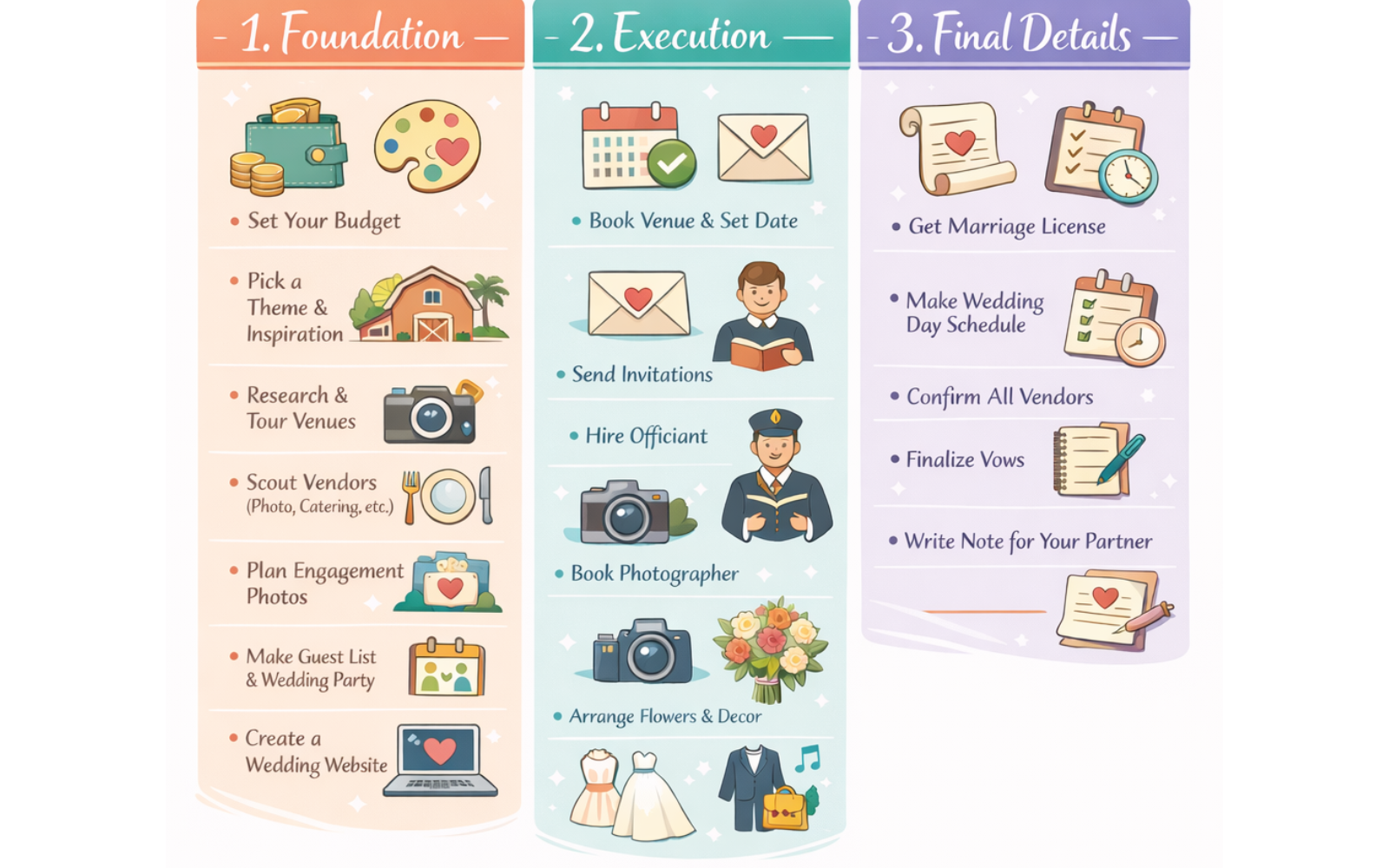
A Calm Step-by-Step DIY Wedding Planning System — Without a Planner
A simple DIY wedding planning system does not give you more tools.
It gives you a safer workflow.
It starts with decisions.
Before anything is organized, you clarify priorities, must-haves, and the trade-offs you can actually live with.
Not in theory.
In real life.
Once those anchors exist, you build a planning roadmap.
Not a timeline yet — a sequence.
What must happen early.
What can wait.
What depends on something else being decided first.
Only after that do organization tools begin to help.
One planning hub.
Fewer files.
Regular, brief check-ins instead of constant research.
This approach works whether you are planning a small wedding, a backyard wedding, a destination wedding, or coordinating details long-distance.
The setting changes.
The decision order does not.
How to Budget Without a Planner — and Avoid Constant Revisions
Inspiration without structure becomes expensive.
DIY wedding planning budgets usually fall apart in the same way.
Couples estimate costs before they agree on priorities.
They copy percentage breakdowns that were built for very different weddings.
They open spreadsheets too early.
A steadier order looks different.
You clarify what matters most first.
You set rough ranges rather than precise numbers.
You build a simple wedding planning budget breakdown.
You adjust only after you receive real quotes.
This protects you from endlessly rebuilding your budget when earlier decisions shift.
Budgeting without a planner works best when the numbers are responding to your plan — not creating it.

1. Why Wedding Planning Without a Planner Feels So Hard
DIY wedding planning stress usually isn’t caused by lack of motivation or organization. It comes from starting in the wrong place.
Most couples planning without a planner struggle because they:
Start with a DIY wedding planning checklist before making decisions
Jump straight into a DIY wedding planning budget spreadsheet
Download multiple timelines, apps, and templates without a system
Try to plan month by month without knowing what actually matters
Wedding planning without a planner requires structure first, not more downloads.
2. The Right Planning Order (Before Checklists or Timelines)
Before using any of the following:
a DIY wedding planning checklist printable
a DIY wedding planning timeline or month-by-month plan
a DIY wedding planning budget breakdown or calculator
a wedding planning app or spreadsheet
First, you need clarity on four foundational decisions:
The Four Decisions That Shape Everything
Priorities – what matters most to you as a couple
Size – guest count ranges, not exact numbers yet
Location type – venue style, city, backyard, destination
Flexibility – dates, seasons, and non-negotiables
This is where most DIY wedding planning mistakes to avoid happen. Budgeting before clarity creates stress, not control.
3. A Step-by-Step DIY Wedding Planning System (Without a Planner)
A calm DIY wedding planning system replaces guesswork with intention.
Instead of juggling dozens of tools, focus on a simple workflow:
Decisions First
Use a DIY wedding planning decision checklist to clarify priorities, must-haves, and trade-offs.
A Planning Roadmap
Create a DIY wedding planning roadmap that shows what comes first, what can wait, and what depends on earlier decisions.
Organization That Works
Apply DIY wedding planning organization tips that don’t rely on a planner: one planning hub, fewer tools, and consistent check-ins.
This system works whether you’re planning without a planner, planning as a busy couple, or coordinating long-distance details.
4. Tools That Actually Help (Without Overwhelm)
One of the most common DIY wedding planning mistakes is tool overload.
Instead of dozens of apps and downloads, focus on:
a DIY wedding planning workbook PDF for decision-making
either a printable planner or a digital planner (not both)
a DIY wedding planning budget spreadsheet or cost estimator
a DIY wedding planning timeline month by month (used after decisions)
Less tools.
More clarity.
5. Budgeting Without a Planner (The Smart Way)
DIY wedding planning budgets go off track when couples:
estimate costs before setting priorities
copy generic budget percentages
open spreadsheets too early
A better order:
Clarify priorities
Set rough ranges (not exact numbers)
Use a DIY wedding planning budget breakdown
Adjust based on real quotes
This keeps DIY wedding planning stress free and prevents constant revisions.
6. Who Wedding Planning Without a Planner Works Best For
This DIY wedding planning guide for beginners is ideal for:
couples planning without a planner
busy couples balancing work and life
small weddings and backyard weddings
destination weddings
couples who want stress-free wedding planning
You don’t need a planner — you need a system that respects your energy and decisions.
7. Who Wedding Planning Without a Planner Works Best For
Planning a wedding without a planner works particularly well for couples who:
want to stay closely involved in their decisions
are balancing work and personal life
at the same time are planning smaller, backyard,
or destination weddings
feel overwhelmed by too much advice and too many tools
You do not need professional oversight to plan well.
You need a planning structure that respects your energy, your priorities, and the way real decisions unfold.
8. Final Thought
You don’t need a wedding planner to plan well.
You need:
a clear DIY wedding planning system
the right planning order
realistic tools that support decisions
fewer assumptions about how weddings “should” be planned
Wedding planning without a planner isn’t about doing more — it’s about doing things in the right order.
Wedding planning without a planner is not about being more organized.
It is about being better sequenced.
Most couples reach a moment where they apparently have everything — templates, timelines, spreadsheets — and still feel unsure.
That uncertainty is not a personal failure.
It is a structural one.
Inside Calyx & Cabana, The Calyx System exists for exactly this stage of planning — when couples are ready for a calmer order of decisions, clearer anchors, and fewer corrective turns later.
Not to add more work.
To quietly protect the planning you are already doing — so your future self does not have to undo it.
a wedding without a planner can feel overwhelming — especially when every DIY wedding planning checklist, timeline, and budget spreadsheet assumes you have professional help. Many couples start strong, only to feel stressed, behind, or unsure if they’re doing things “right.”
But the truth is: most weddings are successfully planned without a planner.
What separates calm DIY wedding planning from chaos isn’t effort — it’s planning order, decision clarity, and using the right DIY wedding planning tools at the right time.
This guide explains how to plan a wedding without a planner, step by step, using a simple DIY wedding planning system that keeps decisions organized, budgets realistic, and stress low — whether you’re planning a small wedding, backyard wedding, or destination wedding.

If planning without a planner feels heavier than it should, it’s rarely because you’re doing too much.
It’s because everything is arriving without order.
Before you tour another venue, know the real minimum you're working with.
The Wedding Venue Minimums Tracker → see the tool
If you want to see the full structure — how every decision connects and what actually belongs first — you can explore The Calyx Wedding Collection™ here
— Sara
Calyx & Cabana™
Related Articles:
