How to Plan a DIY Wedding on a Budget: What to DIY and What to Skip
Most couples treat DIY as a budget fix. It isn't. It's a time, stress, and surprise-expense generator — unless you know exactly which parts are worth it and which will quietly cost you more than hiring someone would have.
That's what this post is about.
Not sure what your wedding should actually cost? Get a realistic number in under 2 minutes. 👉 Try the free Wedding Budget Calculator
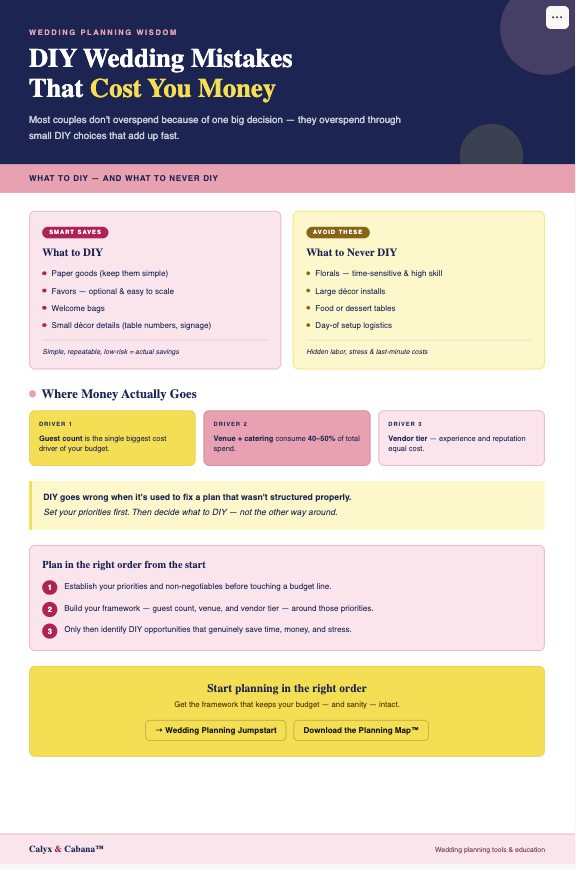
Where DIY Actually Saves Money
DIY can work wonders when approached thoughtfully. Here are some areas that lend themselves well to DIY efforts:
1. Paper Goods (Selectively)
Think save-the-dates, simple signage, and certain printed pieces.
Tip: Keep the design minimal. Simple doesn’t mean boring; a clean, modern look can be incredibly elegant!
2. Favors
Small, optional items such as personalized cookies or handmade candles are great for DIY.
Why? They don’t disrupt the flow of the event and are easy to scale up or down based on your guest count.
3. Welcome Bags
Assembling welcome bags for your guests can be cost-effective.
Ideas: Fill them with local snacks, a small map, or a heartfelt note.
4. Limited Décor Elements
Small details like table numbers or simple centerpieces can work well.
Remember: Choose projects that don’t require large-scale setup or precision.
In these cases, DIY can genuinely reduce costs without adding complexity to your wedding day.

Where DIY Quietly Costs More
While some categories may seem like easy opportunities to save, they often lead to increased costs and stress. Here’s where to tread carefully:
1. Florals
Flowers are beautiful but also perishable and time-sensitive.
Challenge: Sourcing, storage, and last-minute assembly often lead to higher costs and frantic timelines.
2. Large-Scale Décor
Anything needing transport, installation, and styling can quickly become overwhelming.
Reality Check: What seems manageable in theory can spiral out of control on the big day.
3. Food and Dessert Tables
DIY catering might appear cost-effective initially.
Consideration: Factor in prep time, coordination, and the pressure of presentation. Mistakes here are highly visible!
4. Day-of Setup
Anything requiring execution on the wedding day demands time, people, and coordination.
Risk: Without a support team, the burden may fall on you or your guests, leading to stress on what should be a joyful day.
Every decision you're reading about affects your bottom line. See exactly how much you have to work with. 👉 Get your free budget breakdown
The Real Cost Drivers: Focus Here First
If your goal is to stick to your budget, DIY isn’t the primary lever to pull. Instead, focus on these critical areas:
Guest Count
This is the single biggest driver of costs. Every guest affects catering, rentals, and overall scale.
Venue + Catering
These two categories usually consume the bulk of your budget. Decisions made here will set your financial baseline.
Vendor Tier
Consider the experience and ease that higher-end vendors provide, but weigh that against their cost.
If these foundational elements aren’t aligned, DIY projects won’t fix budget issues; they’ll only complicate them.
Why DIY Goes Wrong
Many couples approach DIY as a patchwork solution after plans are already in place. By that point, key decisions have been made, and the budget is already set. This often leads to feelings of being overwhelmed and frustrated.
The Reality: DIY should enhance your wedding experience, not become a source of stress.
The Rule That Actually Saves Money
DIY only works when it supports your priorities—not replaces them.
If you haven’t defined what matters most to you as a couple yet, it’s too early to decide what to DIY. Without clarity, it’s all too easy to take on too much, in the wrong areas, for the wrong reasons.
A Better Way to Approach It
Before diving into DIY decisions, take the time to:
Define Your Priorities
What truly matters to you? Is it the food, the venue, the experience for your guests?
Understand Your Budget Structure
Be clear on what you can afford and where you might need to splurge.
Set Your Guest Count
This foundational number will inform many of your decisions moving forward.
Evaluate Where DIY Fits
Once you have clarity on your priorities and budget, look at where DIY can enhance your wedding without adding stress.
Once these are set, most of the noise in planning starts to fall away.
Ready to stop guessing and see your real number? Enter your guest count and region — takes two minutes. 👉 Open the free Wedding Budget Calculator
If you want to see the full structure — how every decision connects and what actually belongs first — you can explore The Calyx System™ here
—Sara
Calyx & Cabana
Related Articles:
