What to Decide Before You Book a Wedding Venue (or Any Vendors)
If you’re newly engaged, it’s completely normal to feel the urge to do something right away.
Book a venue.
Contact a photographer.
Start gathering quotes.
Put a date on the calendar.
It feels like planning.
Before you tour another venue, know the real minimum you're working with.
The Wedding Venue Minimums Tracker → see the tool
If you’re newly engaged, it’s completely normal to feel the urge to do something right away.
Book a venue.
Contact a photographer.
Start gathering quotes.
Put a date on the calendar.
It feels productive.
But here’s the quiet truth most couples only learn later:
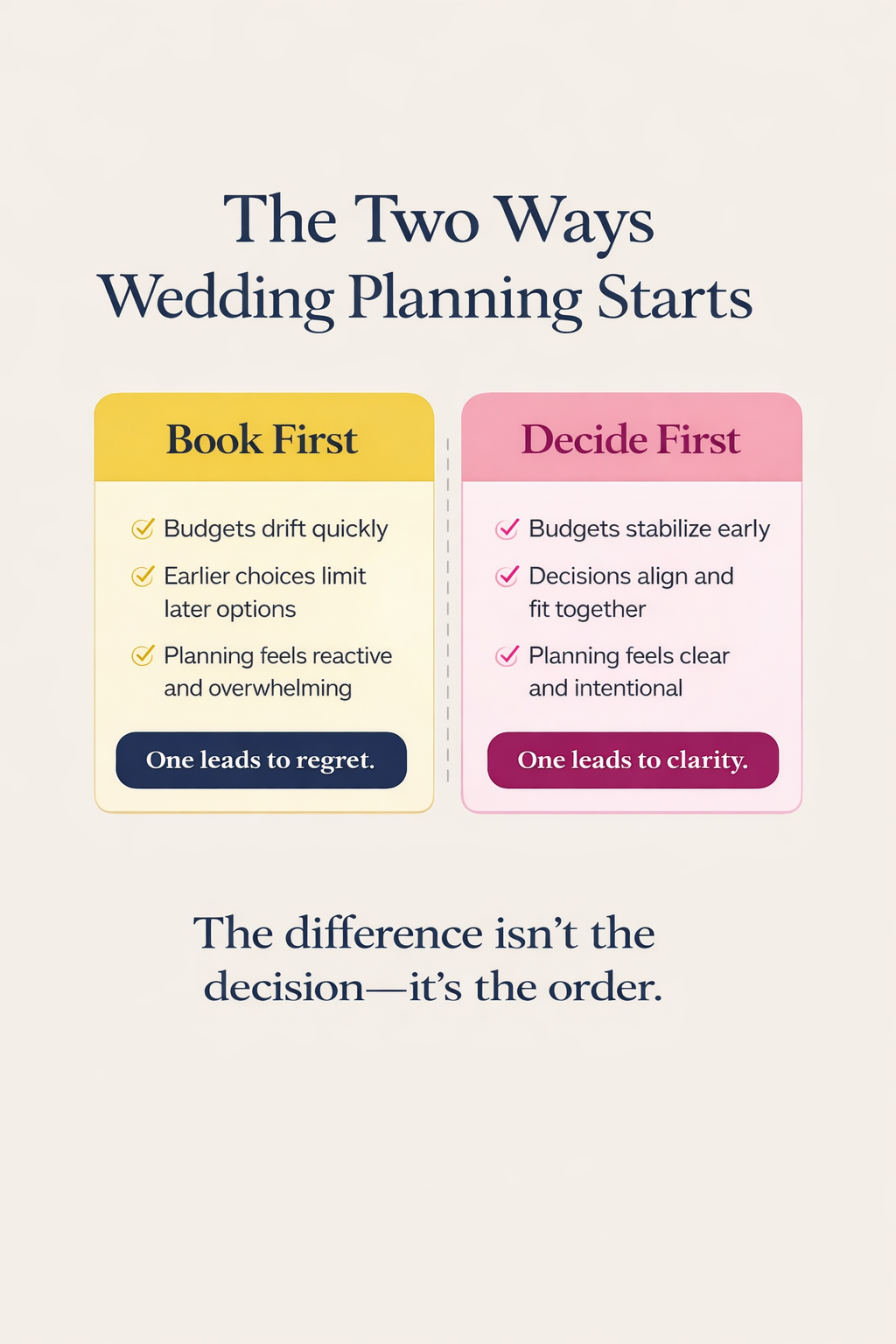
Booking is not the first step in wedding planning.
Deciding is.
And when decisions come after contracts instead of before them, couples don’t usually say they made a bad choice.
They say:
“This is more stressful than we expected.”
“This is costing more than we planned.”
“We keep having to work around earlier decisions.”
Not because they chose poorly.
Because the order was reversed.
It’s the step most people skip — even though it shapes everything that follows.
Before you tour another venue, know the real minimum you're working with.
The Wedding Venue Minimums Tracker → see the tool
The moment planning quietly shifts
There is a moment most couples recognize.
You’ve just finished scrolling through a few venues.
Maybe you saved a photographer.
You open a new tab and start to think about inquiry emails.
It feels like planning has finally begun.
Not because anything is decided yet—
but because something concrete is finally available to choose.
This is usually where wedding planning quietly shifts from reflection into motion.
And it is also where many couples begin carrying decisions they were never given a chance to shape.

Why booking too early changes more than you expect
A venue is not just a location.
It quietly reshapes how your entire wedding behaves.
It sets the structure your budget must follow.
It determines how flexible your guest count really is.
It controls your timeline, logistics, and often the emotional rhythm of the day itself.
The same is true of early vendor decisions.
Once you commit, your options narrow.
That is not a mistake.
It only becomes risky when you commit before you understand what you are actually protecting.
This is where thoughtful couples get into trouble.
Not through impulsiveness.
Through urgency without a decision frame.
The decisions that belong before booking anything
There is a quieter layer of planning that comes first.
It does not look productive from the outside.
But it prevents an extraordinary amount of rework later.
It begins with one anchor:
What matters most about this wedding
Not what photographs well.
Not what feels impressive.
Not what other weddings seem to reward.
What you genuinely want the day to be built around.
When that anchor exists, something shifts:
Certain venues stop making sense immediately
Certain vendors feel misaligned instantly
Complexity becomes something you choose—not inherit
Without it, it’s easy to fall in love with a space that contradicts the experience you actually want.
If you want a clearer place to begin, I share a short guide called The First Decision with newsletter readers.
It’s the step most people skip — even though it shapes everything that follows.
Your real budget boundary
Your budget is not just a number.
It is also emotional.
What will feel stable after the wedding.
What will quietly create stress—even if it’s technically “affordable.”
Because a venue doesn’t just affect one line item.
It shapes catering, rentals, staffing, transportation, and timeline.
Overspending rarely shows up all at once.
It shows up later—when flexibility is already gone.
Your scale
You don’t need a final guest list.
But you do need a realistic range.
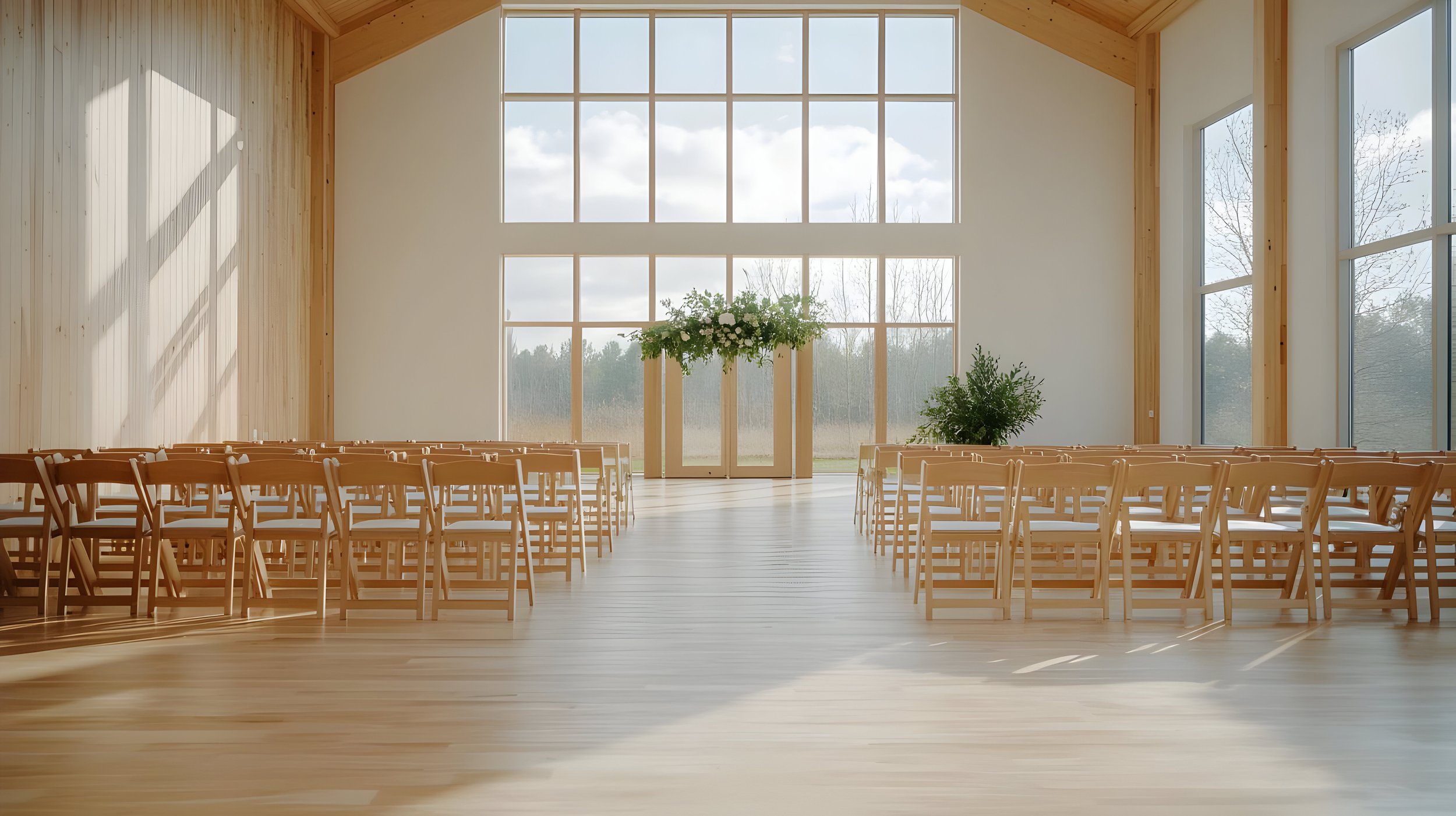
Small, medium, and large weddings behave very differently.
And many couples only feel the conflict after booking—
when their guest reality no longer fits their venue.
Your planning style
Not how you think you should plan.
How you actually function.
Some people thrive on research.
Others burn out quickly.
This is about cognitive load—not capability.
The wrong structure creates fatigue that looks like indecision.
Your decision environment
Who is contributing financially.
Who expects influence.
Where boundaries need to exist.
When this is unclear, contracts quietly become leverage.
Your tolerance for complexity
Multiple locations.
Tight timelines.
Weather exposure.
Large vendor teams.
None of this is wrong.
But each layer adds pressure.
Designing for less strain is not “settling.”
It’s intelligent planning.
What to decide before you book anything
If you’re early in planning and about to reach out to venues or vendors, this is the moment that benefits most from a small pause.
Not to slow you down.
To stabilize what comes next.
The couples who experience the least regret almost always clarify:
What the wedding is centered around
Their real budget boundaries
Their true scale
Their planning structure
Who is involved in decisions
How much complexity they want to carry
Once those are clear, everything changes.
Not because there are fewer options.
Because you can finally recognize what fits.
If you’re about to reach out to venues or vendors, this is the moment that matters most.
A small amount of clarity here changes everything that follows.
The First Decision shows you what to decide before anything gets booked — so your choices are grounded in structure, not urgency.
Before you tour another venue, know the real minimum you're working with.
The Wedding Venue Minimums Tracker → see the tool
— Sara Calyx & Cabana
