The Window That Closes Before You Know It Was Open
There is a window in wedding planning that almost nobody talks about. It opens the moment you get engaged. It closes — quietly, without announcement — the moment you sign your first contract.
Inside that window, everything is still movable. Guest count, venue style, budget allocation, the kind of experience you want to create. All of it is still a conversation. All of it is still yours to shape without consequence.
The moment you sign a contract, one variable locks. Then another. Then another. And every locked variable shrinks the decision space for everything that follows.
Most couples don't realize the window has closed until they're standing in it from the other side — wondering why every new decision feels harder than it should, why the budget seems to resist them, why the planning that was supposed to feel exciting now feels like damage control.
They're not doing anything wrong. They just didn't know the window existed. And nobody thought to tell them before it closed.
Most couples don't realize the window has closed until they're standing on the other side of it.
Most of what follows isn’t about fixing decisions.
It’s about making them in the right order.
Before you tour another venue, know the real minimum you're working with.
The Wedding Venue Minimums Tracker → see the tool

What the Window Actually Is
The window isn't a grace period. It's not a moment of low stakes before the real planning begins. It is, in fact, the highest-stakes planning period you have — because the decisions made inside it determine the cost, the shape, and the emotional texture of everything that follows.
Think of it as the architectural phase. Before any building begins. Before the contractors are hired. Before a single dollar is spent.
In architecture, this phase is treated with tremendous care. The foundation is studied. The load-bearing decisions are made with full awareness of what they'll carry. Nothing gets poured until the structure is understood.
In wedding planning, most couples skip this phase entirely. They go straight to hiring contractors. They start pouring. And six months later, they're trying to make structural changes to something that's already been built.
The window is when your architecture happens. Use it like that.
Before you tour another venue, know the real minimum you're working with.
The Wedding Venue Minimums Tracker → see the tool
What Locks First and Why It Matters
The venue locks first. Almost always.
Couples visit a space, fall in love with it, and sign before they've defined the guest list, the catering parameters, or the total budget container. The venue becomes the anchor. Everything else arranges itself around it — whether it makes sense or not.
This is how guest lists expand to fill spaces that can hold two hundred people when the original intention was eighty. How catering minimums eat the budget that was mentally earmarked for photography. How the aesthetic shifts to match the architecture instead of reflecting the couple's actual personality and preferences.
It's how a couple who wanted something intimate ends up planning something large. Not because they changed their minds — but because the venue they fell in love with made large feel possible, and possible became expected, and expected became planned.
The venue decision is the most consequential early commitment most couples make. And it's almost universally made before the decisions that should precede it.
This isn't a criticism of how couples approach it. A venue is visceral and immediate. You walk in and you feel something. You can picture the whole day. Of course you want to lock it down before someone else does.
But that feeling — as real and valid as it is — is happening in a decision vacuum. You're committing to a container before you know what needs to go inside it.
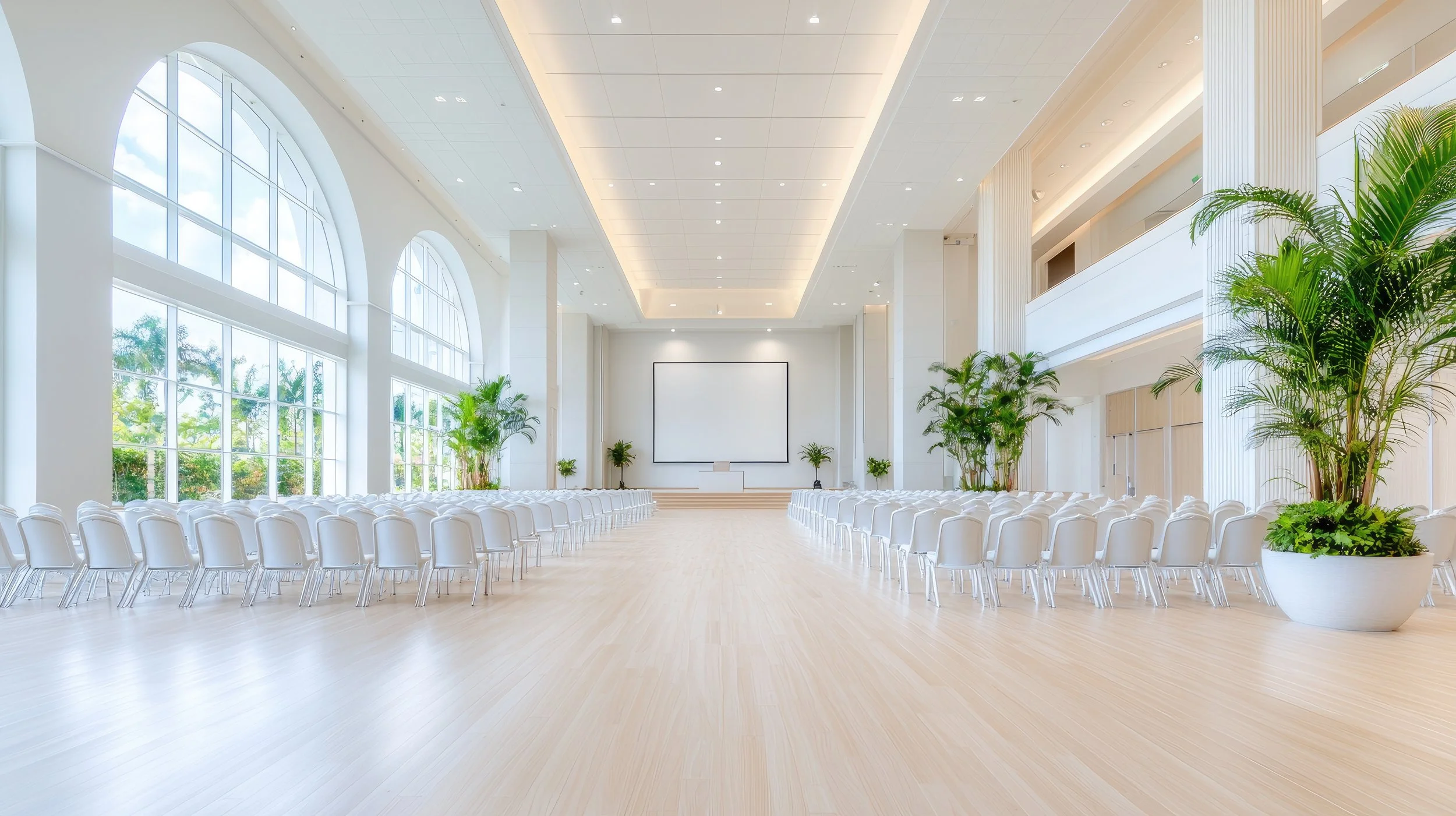
What Follows the Venue Decision
Once the venue is signed, a chain of constrained decisions begins.
The guest list shapes itself around the space. If the venue holds two hundred comfortably, the list has invisible permission to grow toward two hundred. Every addition feels reasonable. The space can hold them. Why not?
The catering decision narrows. Most venues have preferred caterers, required caterers, or minimum spends that function as constraints the couple didn't anticipate. The catering budget that was meant to be flexible becomes the catering budget that's left after the venue minimum is met.
The photographer gets evaluated in the context of a now-depleted budget. The person they actually wanted — the one whose work made them feel something when they first saw it — may now be out of reach. They settle. Not dramatically. Just enough to notice later.
The florals get scoped to match the architecture. A high-ceilinged ballroom requires more volume than a garden space. The florals that felt abundant in the vision may feel sparse in the room. The budget gets revised upward to compensate.
Every one of these adjustments is the direct consequence of a single early decision made without the inputs it needed to be made well.
None of it is catastrophic. But the accumulated cost — financial and emotional — is real. And it was largely preventable.
What Should Happen Instead
Before your first venue tour: know your approximate guest count. Not a range. A real number that you've both agreed on and that you can defend in the face of family pressure and social obligation.
Know your total budget and what percentage can realistically go toward the venue and its associated costs. Industry guidance puts venue at roughly 30–35% of total spend — but what matters more than the percentage is that you've decided it in advance, before you've fallen in love with a space.
Know whether you want an indoor, outdoor, or flexible space. Know what geography works for your guests — are most people local, or are you asking people to travel? A venue that requires a ninety-minute drive changes your guest experience whether you've planned for it or not.
Know what the day is actually for. Not aesthetically. Experientially. Is this a ceremony — weighted, intimate, meaning-forward? Or a celebration — expansive, festive, designed for a full room and a long night? The answer changes the venue requirements more than any other variable.
These aren't administrative details. They're your criteria. Without them, a venue tour is just an emotional experience. With them, it's a decision. A real one, made from a position of knowledge instead of feeling.
The couples who walk into their first venue tour with defined criteria move through the process faster, with less stress, and with significantly more budget intact on the other side. Not because they're more disciplined. Because they're working from a foundation.
The Cost of Skipping the Foundation
Let's be specific about what's actually at stake.
The average couple who books a venue before they've locked their guest count ends up with a guest list that's 15–25% larger than their original intention. At a realistic per-person cost of $150–$350 in most markets, that's $5,000–$20,000 in spending that was never planned.
The couple who falls in love with a venue before they've allocated their budget typically assigns 40–50% of their total spend to the venue and its associated costs — rather than the 30–35% that leaves room for everything else. On a $40,000 wedding, that's $4,000–$8,000 redirected from photography, flowers, food, or music.
These numbers aren't invented. They're the pattern that shows up across thousands of couples who planned the same way: venue first, foundation second, consequences third.
The fix isn't restraint. It isn't discipline or willpower or better spreadsheets. The fix is sequence. The fix is making the foundational decisions before the contract decisions — not after.

The Window Is Still Open. Use It.
If you haven't signed a contract yet, you are in the best possible moment of your planning. Not because everything is easy — nothing about planning a wedding is easy — but because everything is still possible. Every decision is still open. Every variable is still adjustable.
You have the thing that couples six months into planning would pay to have back: optionality. The ability to make the right decision instead of the best available decision given what's already been committed.
Don't spend that optionality on Pinterest.
The window doesn’t stay open.
The best planning happens before it closes.
If you want to see the full structure — how every decision connects and what actually belongs first — you can explore The Calyx Wedding Collection™ here
Before you tour another venue, know the real minimum you're working with.
The Wedding Venue Minimums Tracker → see the tool
— Sara
Calyx & Cabana™
Related Posts:
