The Wedding Budget Nobody Talks About: The One You Build in a Panic
I came to weddings sideways. Garden design, interior design, professional organizing — decades of taking beautiful chaotic things and making them ordered, functional, and actually livable. Then time spent working with a wedding florist, a few weddings I did florals for on my own, more venue setups than I can count. And now two sons who are dragging their feet on planning their own weddings while I watch them make every mistake I already know how to prevent.
That last part is what finally pushed me over the edge.
And I am going to tell you something that the wedding industry would very much prefer I did not.
The budget conversation almost everyone is having is the wrong one.
Before you tour another venue, know the real minimum you're working with.
The Wedding Venue Minimums Tracker → see the tool
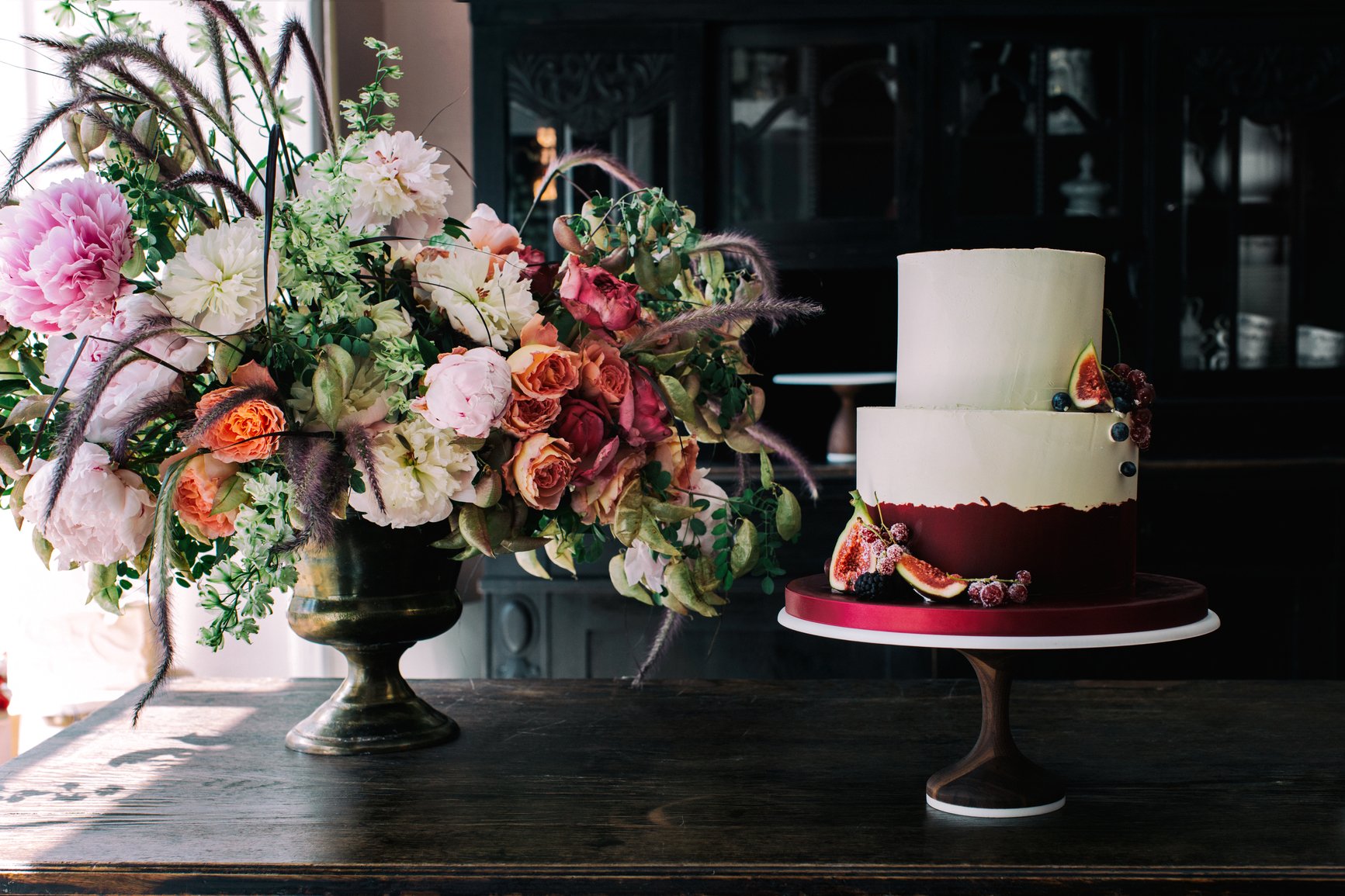
The budget you set in the first week is not a budget. It is a wish.
Here is what I see happen, over and over again, with almost every newly engaged couple I have ever encountered.
They get engaged. They are thrilled. Rightly so. Someone gets down on one knee, there are tears, there is champagne, there are approximately forty-seven Instagram stories. And then, usually within the first seventy-two hours, someone — a parent, a friend, a well-meaning aunt who got married in 1987 and genuinely believes flowers still cost what they did then — says "so what's your budget?"
And because nobody wants to seem unprepared, a number gets said. Thirty thousand. Fifty thousand. Twenty-five. Whatever feels responsible and adult and not completely terrifying to say out loud.
That number, said casually over a kitchen table during the engagement glow, becomes the invisible ceiling of every single decision that follows.
Except it has no foundation whatsoever. It is not based on what things actually cost in your city, in your season, at your guest count. It is not based on anything except what felt reasonable to say on a Tuesday evening when you were still slightly in shock that it was happening at all.
I once worked with a couple who had confidently told everyone their budget was forty thousand dollars. Lovely people. Sensible people. Both in finance, which I mention only because it makes what happened next more delightful. They had not looked up a single vendor price before setting that number. They had not calculated their guest count. They had not considered that they were getting married in peak season in one of the most expensive markets in the country. They had simply said forty thousand because it sounded like enough.
It was not enough. Not even close.
Here is what a wedding budget actually needs to be built on.
Before you put a number on anything — before you open a single venue website, before you follow a single florist on Instagram, before you do anything at all — you need to know four things. Not guess them. Know them.
First: your guest count. Not an approximation. Not "somewhere between eighty and a hundred and fifty depending on whether we invite work people." A real, working number. Because every person you add to that list is not just a seat at a table. They are a catering head count, a rental chair, a place setting, a bar tab, a favour, a slice of cake, and a portion of the venue cost that scales with capacity. The guest count is the single biggest multiplier on almost every other number in your budget. I cannot tell you how many couples I have watched set a budget, fall in love with a venue, and then realise their guest list doesn't fit — and the version of the venue that fits costs twelve thousand dollars more.
You cannot set a meaningful budget without a real guest count. This is not negotiable.
Second: your non-negotiables. What is the one or two things about this wedding you will not compromise on, full stop? For some couples it is the photographer — they want someone specific and they will eat instant noodles for six months to make it happen. For others it is the food, because they are genuinely that serious about a meal and they know their guests are too. For others it is the band, or the venue, or the florals. Knowing your non-negotiables tells you where your budget needs to be protected and where it has permission to flex. Without this, everything feels equally important, the budget gets pulled in seventeen directions at once, and you end up with a wedding that was medium at everything and exceptional at nothing.
Third: your priorities in order. Not just what matters, but what matters most, and what comes second, and what comes third. Because when the budget gets tight — and it always gets tight, this is practically a law of nature at this point — you need a hierarchy. You need to already know what gets cut before what. The couples who have this conversation early are the ones who make clean decisions quickly. The couples who do not are the ones having the same argument for three weeks because they cannot decide whether to cut the videographer or downgrade the catering.
Fourth: what you genuinely do not care about. This is the one nobody talks about, and it is worth more than people realise. There are things in every wedding that couples spend money on because they feel like they are supposed to. Favours that sit untouched on tables and end up in a bin. Photo booths that get used enthusiastically for the first forty minutes and then forgotten. Elaborate printed programs that detail the exact order of a ceremony that lasts twenty-three minutes. Charger plates. Do you know how many people have told me they wish they had skipped the charger plates.
I once watched a couple spend over two thousand dollars on custom matchbooks, macarons in their wedding colours, and personalised luggage tags. I watched approximately four people take a luggage tag. The macaroons were nice. Nobody needed a matchbook. Knowing what you genuinely do not care about is worth thousands of dollars and it is the most underrated budget conversation you can have.
Before you tour another venue, know the real minimum you're working with.
The Wedding Venue Minimums Tracker → see the tool
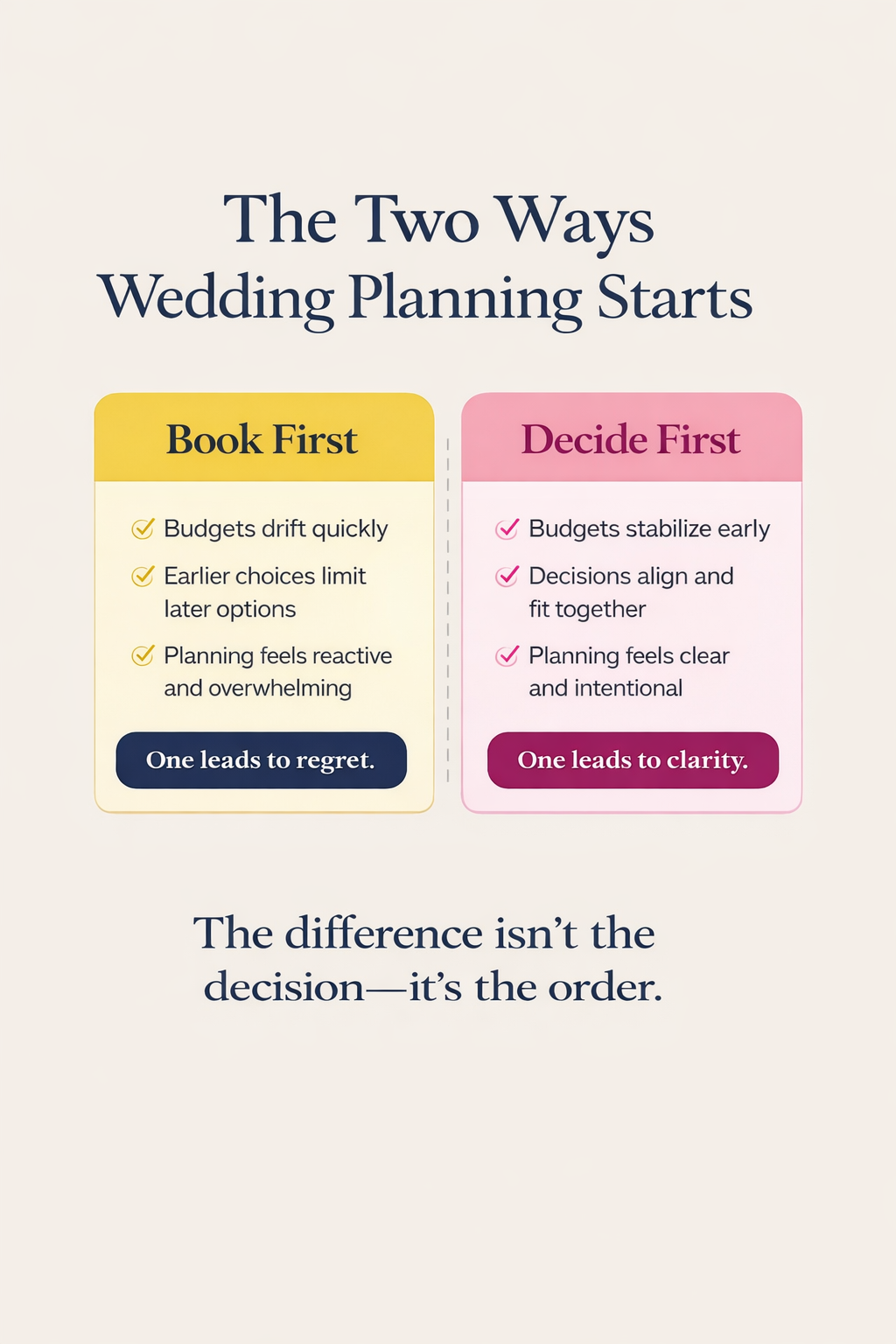
The expensive budget mistake nobody warns you about.
It is not one big overspend. It is never one big overspend. Nobody sits down and says "yes, let's just spend an extra eight thousand dollars today, that seems fine." It does not happen that way.
It is twelve small ones.
It is the florist revision that costs six hundred dollars because the original brief was too vague and the first proposal came back completely wrong and the brief had to be redone and there was a second consultation fee and now the whole thing costs more than it did originally. It is the venue upgrade that happens because you locked in a head count of ninety, fell in love with a room that held ninety, and then your mother had "a few more people" to add and now you need the room that holds a hundred and twenty and it costs four thousand dollars more. It is the catering adjustment in month eight because nobody collected dietary requirements properly and now there are seventeen guests with restrictions that weren't accounted for in the original quote. It is the stationery reprint because there was a typo in the venue address that nobody caught until after the first run had been printed. It is the wedding dress alteration that had to be done twice because the first fitting happened before you lost the weight you said you were going to lose and then actually did.
None of these feel like mistakes when they happen. Each one just feels like dealing with something that came up. Each one is completely understandable in isolation.
Together they add up to the gap between what you planned to spend and what you actually spent. And that gap, in my experience, is rarely under five thousand dollars. I have watched it reach twenty. I have watched people quietly absorb costs they never discussed with their partner and are now mildly resentful about in ways they haven't quite named yet.
The gap is not inevitable. But it requires building the foundation before the budget, and most people do not do that.
What to do instead.
Build your foundation before you build your budget. Make the decisions that your budget depends on — the guest count, the non-negotiables, the priorities, the things you genuinely do not care about — before you put a number on anything.
I know that sounds slower. I know that when you are newly engaged and excited and everyone is asking questions and your future mother-in-law wants to know about venues and your best friend wants to know if she is a bridesmaid yet and your own mother has already sent you four Pinterest boards, the pressure to have answers feels enormous.
But a budget built on a foundation will hold. A budget built on enthusiasm and a vague sense of what feels like enough will not. I have watched this play out enough times to tell you with complete confidence that the couples who take the time to build the foundation first are the ones who actually stay on budget. Not because they are more disciplined. Because they built something that was possible in the first place.
Start with the foundation. The budget follows. And when it does, it actually means something.
Before you tour another venue, know the real minimum you're working with.
The Wedding Venue Minimums Tracker → see the tool
—Sara
Related Articles:
Why Most Couples Overspend on Their Wedding Before the First Vendor Is Booked
A Simple Wedding Budgeting Process That Actually Holds Together
7 Budget Mistakes That Are Quietly Wrecking Your Wedding Plans
The 4 Wedding Planning Mistakes That Cost Couples the Most Money (None of Them Are What You Think)
Your Wedding Budget Isn't Broken — But the Way You Built It Might Be
