
How to Plan a Wedding Without a Planner (and Still Feel Calm and Confident)
Planning a wedding without a professional planner is more common than people admit.
For many couples, it’s a practical choice. For others, it’s an intentional one. Either way, choosing not to hire a planner doesn’t mean you’re setting yourself up for stress, confusion, or regret.
What it does mean is that the way you approach planning matters.
Because the challenge of planning without a planner isn’t a lack of capability — it’s a lack of orientation.
If you want a clear place to begin, I share a short guide called The First Decision — what to decide before anything gets booked, so planning starts with direction instead of guesswork.
→ Read it here

You’re not missing expertise. You’re missing structure.
Most couples assume planners are valuable because they “know everything.”
In reality, the most helpful thing a planner provides isn’t insider knowledge — it’s order.
They know:
what to decide first
what can wait
what decisions affect everything else
Without that structure, couples are often handed:
endless checklists
conflicting advice
pressure to book quickly
inspiration before clarity
And that’s when planning starts to feel overwhelming.
Not because you’re doing it wrong — but because you’re being asked to make decisions without context.
Planning without a planner works best when you slow the beginning
One of the biggest misconceptions about wedding planning is that things need to move fast right away.
They don’t.
In fact, the earliest phase of planning is the least urgent — and the most important.
This is the moment to:
understand your priorities
define your boundaries
clarify what matters (and what doesn’t)
see the full picture before zooming into details
When couples skip this step, they often find themselves:
locked into choices they don’t fully understand
adjusting budgets after commitments are made
feeling behind before they’ve even begun
None of that is inevitable.
What replaces a planner is not more effort — it’s a framework
Planning without a planner doesn’t mean doing more.
It means having:
a clear starting point
a thoughtful decision order
a way to evaluate choices calmly instead of reactively
When you know what to decide first and why, planning becomes steadier. Decisions feel lighter. Trade-offs make sense. The noise quiets.
You don’t need to know every detail.
You just need to know where you are in the process.
If you’re trying to understand where you actually are in the process, I share a simple planning map in the newsletter — the order most couples never see until decisions start colliding.
→ Get it here
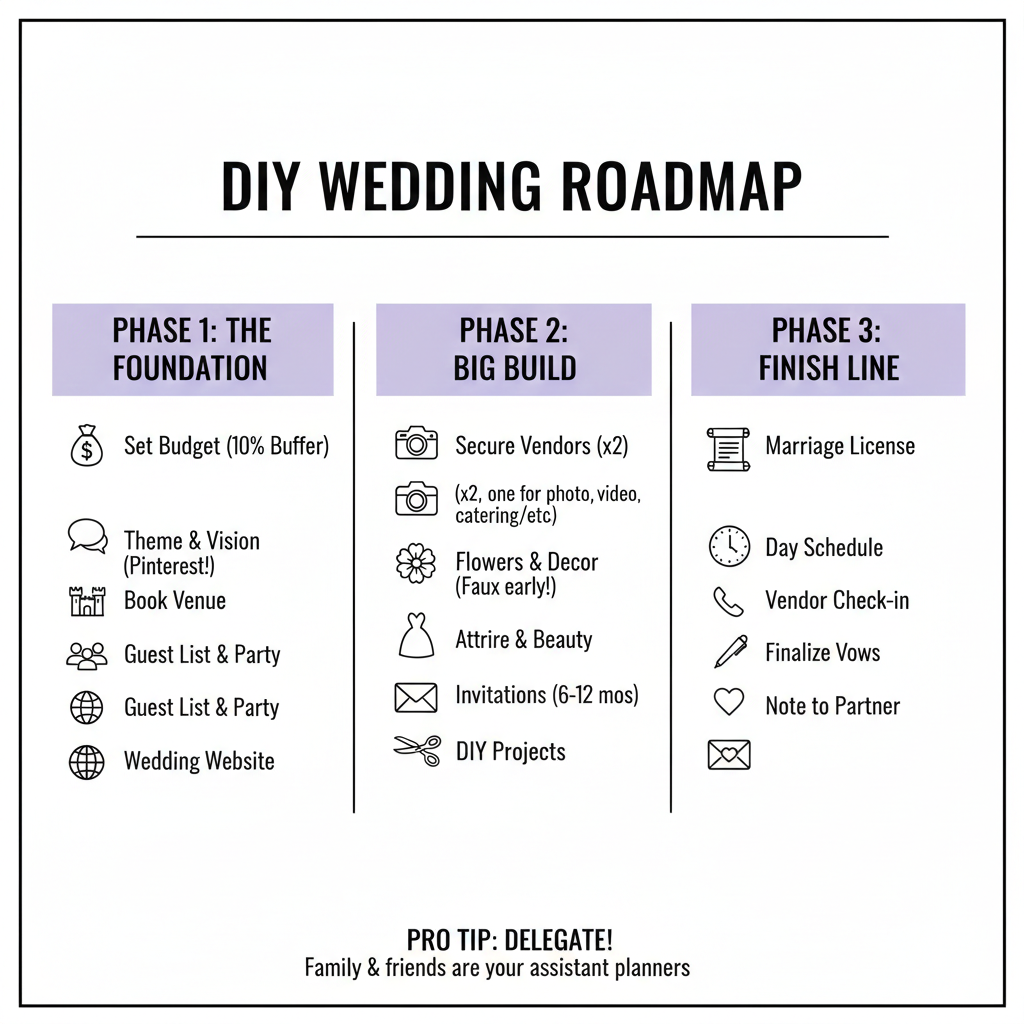
Inspiration comes later — clarity comes first
Pinterest boards, mood boards, and ideas can be joyful — but only when they’re grounded in clarity.
When inspiration leads the process too early, it can create:
comparison instead of confidence
urgency instead of intention
choices that don’t align with your priorities
Clarity doesn’t remove creativity.
It gives it direction.
You are allowed to plan this your own way
There is no requirement that wedding planning be outsourced, accelerated, or chaotic.
You’re allowed to:
take your time
plan thoughtfully
ask better questions before making commitments
build structure instead of chasing certainty
Planning without a planner is not a disadvantage.
It’s simply a different approach — one that works best when it starts with orientation instead of pressure.
Planning Without a Planner Doesn’t Require More Effort
It requires a better decision system.
Most couples don’t struggle because they chose the wrong vendors.
They struggle because they started without a structure.
The First Decision shows where planning actually begins — before timelines, budgets, and bookings start pulling in different directions.
→ Read it here
If you want the full framework behind it — the step-by-step structure that replaces a planner — you can explore it when you’re ready.
→ Get The Wedding Planning Jumpstart™
— Sara
Calyx & Cabana™
